Thailand
Koh Phangan
Island life with a growing, tight-knit family expat scene
Family budget at a glance
The all-in range matches the FAQ answer for "How much does a family typically need per month here?" The other cards are single-line benchmarks — they don't add up to that total (school fees and other costs are separate).
All-in / month (family of 4)
~$2,000–$3,500 / month
3-bed family home
~$560 / month
Dinner for 2 (mid-range)
~$11
Nanny
~$5 / hr
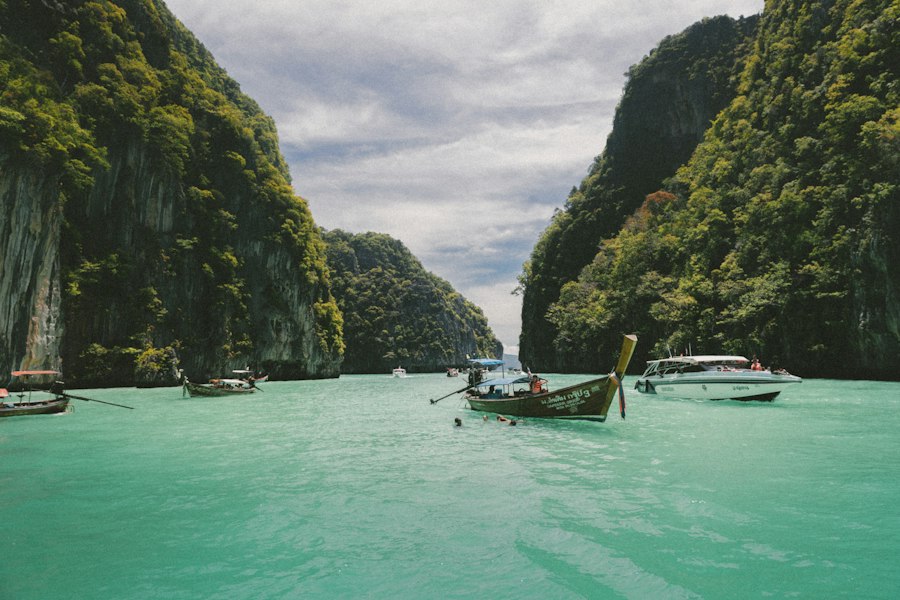
Koh Phangan has evolved well beyond its Full Moon Party reputation. The north and west coasts — especially Sri Thanu and Haad Yao — now host hundreds of families year-round. Life here is slow, affordable, and deeply connected to nature. The trade-off is infrastructure: schooling options are limited on the island and medical care requires a boat or flight to the mainland for anything serious.
Explore more family guides in Thailand →
Action checklist
Concrete steps to make this move happen, in order.
Click any step to jump to that section ↓
- 1Apply for the DTV at a Thai embassy before travelling — do not rely on visa-on-arrival for a long-term move
- 2Plan your schooling approach before arrival: online curriculum (Acellus, Khan Academy, Cambridge Home School) or community cooperative groups
- 3Arrange medical evacuation insurance — essential when living on a remote island without a full-service hospital
- 4Find short-term accommodation through Airbnb to scout areas before committing long-term
- 5On arrival: ask your landlord to file the TM30 address form — required by Thai immigration within 24 hours
- 6Open a Thai bank account at Bangkok Bank in Thong Sala once you have a non-immigrant visa
- 7Search for Koh Phangan expat community groups (such as Koh Phangan Expats) before you arrive — they are the primary resource for new families
- 8Plan around smoke season (Feb–April) if you have children with asthma or respiratory conditions
- 9Set up a UPS for your work equipment — power fluctuations are common on the island
- 10Budget for a reliable car or motorbike rental from day one — Koh Phangan has no public transport and steep, flooded roads make this a genuine safety need, not just a convenience.
Family fit
Great for
- Families seeking an alternative, nature-immersed lifestyle
- Parents comfortable with online schooling or unschooling
- Families who want a tight-knit, supportive international community
- Those wanting extremely low cost of living with high quality of life
Watch out for
- Limited international schooling options on the island — primary concern for school-age children
- Medical care is basic — serious cases require mainland hospital (Koh Samui or Surat Thani, ~1 hour away)
- Infrastructure is improving but still developing — power cuts and water issues are occasional realities
- Island fever is real — some families need more stimulation and city access than the island provides
Climate & seasons
Monthly normals (2001–2020) · MERRA-2 (NASA POWER)
Rainy-day counts are approximate (from monthly rainfall).
- HottestApr · 31.2°Cmean daily high
- CoolestJan · 25.3°Cmean daily low
- WettestNov · 375 mmmonth total
- DriestFeb · 38.1 mmmonth total
- Low
- 25.3°C
- Rain
- 135.5 mm
- Wet days
- ~11
- Low
- 25.5°C
- Rain
- 38.1 mm
- Wet days
- ~3
- Low
- 26.1°C
- Rain
- 114.4 mm
- Wet days
- ~10
- Low
- 27.3°C
- Rain
- 90.3 mm
- Wet days
- ~8
- Low
- 27.4°C
- Rain
- 169.9 mm
- Wet days
- ~14
- Low
- 26.9°C
- Rain
- 167.1 mm
- Wet days
- ~14
- Low
- 26.7°C
- Rain
- 166.2 mm
- Wet days
- ~14
- Low
- 26.5°C
- Rain
- 144.2 mm
- Wet days
- ~12
- Low
- 26.3°C
- Rain
- 180.6 mm
- Wet days
- ~15
- Low
- 26.2°C
- Rain
- 245.8 mm
- Wet days
- ~20
- Low
- 26.3°C
- Rain
- 375 mm
- Wet days
- ~30
- Low
- 25.5°C
- Rain
- 261.6 mm
- Wet days
- ~22
| Month | Typical high | Typical low | Rain (total) | Rainy days (~) |
|---|---|---|---|---|
| Jan | 28.2°C | 25.3°C | 135.5 mm | 11 |
| Feb | 28.8°C | 25.5°C | 38.1 mm | 3 |
| Mar | 30.3°C | 26.1°C | 114.4 mm | 10 |
| Apr | 31.2°C | 27.3°C | 90.3 mm | 8 |
| May | 31.2°C | 27.4°C | 169.9 mm | 14 |
| Jun | 30.7°C | 26.9°C | 167.1 mm | 14 |
| Jul | 30.1°C | 26.7°C | 166.2 mm | 14 |
| Aug | 30.2°C | 26.5°C | 144.2 mm | 12 |
| Sep | 29.8°C | 26.3°C | 180.6 mm | 15 |
| Oct | 29.4°C | 26.2°C | 245.8 mm | 20 |
| Nov | 29.2°C | 26.3°C | 375 mm | 30 |
| Dec | 28.8°C | 25.5°C | 261.6 mm | 22 |
Family notes
- Warmest month on average: Apr (mean daily high ~31°C); coolest: Jan (mean daily low ~25°C).
- Most rainfall on average: Nov (~375 mm total); driest: Feb (~38 mm).
- Very wet months mean waterproofs, covered waiting at school pickup, and extra room to dry uniforms and shoes.
These values are long-term monthly climatologies from NASA POWER (MERRA-2 reanalysis) for the nearest model grid cell to these coordinates — not a single city-centre weather station. Spatial resolution is about 50 km; coastal belts, hills, and dense urban cores can differ. Precipitation is corrected MERRA-2 rainfall; rainy-day counts are approximated from monthly totals.
Grid cell used: 9.745°, 100.025° (WGS84)
Visa options
Reviewed Jan 2026
Reviewed Jan 2026
Thailand has no EU-style permanent residency for foreigners. Short visits use a visa exemption on arrival or a consular tourist visa. For families staying long-term, the two practical routes are the DTV (Destination Thailand Visa, launched July 2024) — 180 days per entry on a 5-year multiple-entry visa — and the Thailand Privilege Visa (formerly Thailand Elite, rebranded October 2023) — a 5-to-20-year membership for families who want stable stays without periodic visa runs.
Tap the ? next to a term for a quick definition.
Tourist Visa / Visa Exemption
Good for an initial scouting trip. Not suitable for long-term stays or remote work.
DTV — Destination Thailand Visa
Thailand's long-stay visa for remote workers, launched July 2024. The best option for most expat families.
Thailand Privilege Visa (formerly Thailand Elite)
Government-backed long-stay residency operated by Thailand Privilege Card Co. (Ministry of Tourism and Sports). Rebranded from Thailand Elite in October 2023 with restructured tiers and prices.
Tourist Visa / Visa Exemption — what it allows
- Visa exemption on arrival: 54 countries (US, UK, EU, Canada, Australia, Japan, Singapore, UAE and others) currently get 30 days on arrival. This was 60 days from July 2024 until a Thai Cabinet decision on 19 May 2026 reduced it back to 30 — older travel advice may still cite the 60-day rule, so always verify on the Thai MFA site before booking.
- Extension at any Thai immigration office: +30 days for ~1,900 THB (about $55), at the immigration officer's discretion — not guaranteed, so plan around 30 days rather than counting on the extension.
- TR (Tourist Visa) applied at a Thai consulate before travelling: 60 days on arrival, plus one 30-day extension at immigration. This is the safer route if you want a longer scouting trip.
- Visa on Arrival (the paid 15-day visa) is available to only 4 nationalities (India, Belarus, Serbia, Azerbaijan) — most travellers cannot use this route.
- You cannot legally work on a tourist visa — this includes remote work for a foreign employer.
- Do not attempt to live in Thailand on back-to-back tourist entries — Thai immigration actively monitors this pattern and may deny re-entry.
- Best use: an initial 2–8 week scouting trip to view neighbourhoods, visit schools, and apply for a long-stay visa from back home or in a neighbouring country.
DTV (Destination Thailand Visa) — how to apply
- Stay: 180 days per entry, extendable once inside Thailand for another 180 days — up to ~360 days per entry cycle. Valid for multiple entries for 5 years from issue.
- Savings requirement: 500,000 THB (~$14,500 USD) in liquid personal savings, shown via 3–6 months of consistent bank statements. Stocks, crypto, retirement accounts, and business accounts are not accepted.
- Per dependent: most Thai embassies require another 500,000 THB (~$14,500) per dependent (spouse and each child). A family of three typically needs to show ~1,500,000 THB (~$43,000) total — confirm the exact figure with the consulate you apply through.
- Apply only from outside Thailand via the official e-Visa system (thaievisa.go.th) or at a Thai consulate — you cannot switch to a DTV from inside Thailand on a tourist entry.
- Cost: 10,000 THB (~$275–$500 depending on consulate) one-time fee for the full 5-year multi-entry visa. The 180-day in-Thailand extension costs another ~10,000 THB (~$275).
- No work permit included — you cannot legally work for a Thai employer or client. Remote work for foreign employers is the intended use.
- Tax residency warning: if you spend 180+ days in a calendar year in Thailand you become a Thai tax resident. Foreign income remitted into Thailand can be taxable since 1 January 2024 — talk to a Thai tax advisor before remitting large sums.
- After arrival, ask your landlord to file the TM30 (the landlord's address notification to immigration) within 24 hours, and file a 90-day report every 90 days (online at imm.immigration.go.th or in person at your local immigration office).
Thailand Privilege Visa — long-stay membership
- Five tiers (all one-time fees; no savings, income, or age requirements):
- Bronze — 650,000 THB (~$18,000–$20,000) for 5 years. The cheapest entry point; dependents not included.
- Gold — 900,000 THB (~$25,000–$28,000) for 5 years. Includes 20 service points/year; dependents not included.
- Platinum — 1,500,000 THB (~$42,000–$47,000) for 10 years. Dependents can be added for ~1,000,000 THB each.
- Diamond — 2,500,000 THB (~$70,000–$78,000) for 15 years. Dependents can be added for ~1,500,000 THB each.
- Reserve — 5,000,000 THB (~$140,000+) for 20 years. Invitation only.
- Not a work permit — but widely used by remote workers because there are no in-Thailand reporting periods to manage and no DTV-style savings paperwork.
- Best for families wanting maximum stability without periodic visa runs, savings proof, or consulate appointments. Bronze (~$3,700/year over 5 years) is roughly comparable to DTV renewal costs but with much less paperwork. For families needing dependents covered, Platinum or Diamond is usually the cheapest route per person.
Apply for the DTV at least 4–6 weeks before your travel date — Thai consulates in major cities can get backed up. Always verify your nationality's current visa-exemption length on the Thai Ministry of Foreign Affairs website before booking — Thailand has revised the rules multiple times in recent years.
Registration & 90-day report
Reviewed Jan 2026
Reviewed Jan 2026
- Thailand has no residency permit system for foreigners — your passport and current visa stamp are your ID documents on the island.
- Your landlord must file a TM30 form (address registration with immigration) within 24 hours of your arrival — ask them to confirm they have done this.
- All visa holders must report their address to Thai immigration every 90 days. File online at imm.immigration.go.th or in person at the Koh Phangan Immigration Office in Thong Sala.
- Keep copies of all visa stamps, extension approvals, and 90-day receipts — officers ask for them during renewals.
- For banking, school enrolment, and admin, your passport and current visa stamp serve as your complete identification.
Do your 90-day report online at imm.immigration.go.th — it saves a trip to the immigration office in Thong Sala.
Banking
- Bangkok Bank in Thong Sala is the main option for expats — generally accepts DTV visa holders.
- Bring your passport, current visa, and a rental contract as proof of address when opening an account.
- Use Wise or Revolut for receiving international income and converting to Thai Baht — Thai bank wire fees are high.
- ATMs are available in Thong Sala and main tourist areas; many island vendors still prefer cash.
- Keep $28–$84 in cash at home — ATMs can run empty on busy weekends or after weather events.
Bangkok Bank in Thong Sala is the most commonly used by expats on the island — bring your passport and DTV visa for the opening appointment.
Housing
Koh Phangan is one of the most affordable places to live in Southeast Asia. A well-equipped 2–3 bedroom villa with a pool rents for $400–$900/month. Sri Thanu and Haad Yao are the family hubs.
Where to search
These are the main platforms used to find long-term housing on Koh Phangan.
Search 'Koh Phangan' inside each platform to filter local listings.
Tip: the best homes in Sri Thanu and Haad Yao go by word-of-mouth. Search for expat community groups online before arriving and post what you are looking for — many landlords never list online.
Typical monthly rents
- 1-bed house or bungalow, Sri Thanu: $220–$420 / month
- 2-bed house with garden, Sri Thanu / Haad Yao: $330–$610 / month
- 3-bed house with pool, Sri Thanu: $610–$1,110 / month
- Furnished short-stay option (bills included): $420–$830 / month
Best areas for families
What you need to rent
- Passport and current visa stamp
- 1–2 months security deposit in cash
- Rental agreements on the island are often informal — always get a written contract with the monthly rate, deposit terms, and notice period
- Ask your landlord to file the TM30 address form with immigration within 24 hours of arrival — they are legally required to do this
- Check whether the property has a UPS or voltage stabiliser — power fluctuations are common on the island
Schools
Formal international schooling on Koh Phangan is very limited. Most expat families plan their educational approach carefully before arriving — online schooling and community groups are the norm.
Public system
Thai government schools exist on the island but teach entirely in Thai. Not a viable option for most expat children.
International options
There is no full international school on Koh Phangan. A few small private and Montessori-style micro-schools exist serving the expat community, but they are not accredited and cater mainly to early years. Families with secondary-school-age children typically move to Koh Samui or Chiang Mai.
Language notes
English is the informal community language among expats. Children in the expat community grow up in a largely English-speaking social environment. Thai language support is available through local tutors.
Most expat families on Koh Phangan homeschool or relocate to Chiang Mai / Bangkok for secondary education. Research this carefully before moving with school-age children.
Education options
Small community schools and micro-schools
Very limited formal options on the island. Mostly small, informal, or Montessori-style. Not accredited international schools.
Online and home-education programs
Many Koh Phangan expat families use accredited online curricula (Acellus, Cambridge Home School, Khan Academy) combined with a local tutor — practical given the limited bricks-and-mortar international school capacity on the island. Costs: ~$1,000–$3,000/year for curriculum plus $300–$600/month for a tutor.
Childcare
Hiring a Thai nanny is easy, affordable, and very common in the expat community. Formal daycare is limited — cooperative childcare is often the preferred solution.
Daycare & nurseries
- A small number of private nurseries and community micro-schools serve expat families — mainly in Sri Thanu
- Options are limited compared to a city; cooperative childcare (nanny shares, community playgroups) is very common and often preferred
- Community nursery fees: typically $196–$392 / month
- Ask in expat community groups before arriving — the best current options change as the community evolves
Nanny & au pair
- Full-time Thai nannies are widely available and affordable — roughly $295–$505 / month for a live-in arrangement
- Part-time nannies: roughly $4–$6 / hr
- Most families in Sri Thanu and Haad Yao hire through community word-of-mouth — referrals are the most reliable route
- English fluency varies — vetted nannies who speak English are sought-after in this smaller community
Where to find childcare
- Search 'Koh Phangan Expats' on Google — primary resource for nanny and childcare recommendations
- Search 'Koh Phangan Family Community' on Google — family-focused group with local knowledge
- Search 'Phangan Mamas' on Google — mums-specific group, good for childcare referrals
- Word-of-mouth at community playgroups — often the fastest route to a vetted referral
Healthcare
Reviewed Jan 2026
Reviewed Jan 2026
- Several walk-in clinics on the island handle minor illnesses, children's GP appointments, and basic injuries well.
- Bangkok Hospital Koh Phangan provides outpatient care and basic emergency services — it is a smaller facility than a mainland hospital.
- For serious emergencies — surgery, complicated births, major trauma — you will be evacuated to Bangkok Hospital Koh Samui (~1 hour by boat) or directly to Bangkok. Plan and insure for this.
- Medical evacuation insurance is essential on Koh Phangan — airlift costs without insurance can be very high.
- Keep a basic home medical kit (paediatric medicines, wound care, rehydration salts) — it saves a boat trip for minor issues.
Medical evacuation insurance is not optional here — get a policy that covers airlift to Koh Samui or Surat Thani before you arrive.
Optional insurance option
Some families prefer to have private international medical coverage for the first period abroad. SafetyWing is one option to check if you want a flexible plan while relocating.
Check SafetyWingAlways confirm that any insurance you choose matches your visa, residency, and healthcare needs.
Safety
- The family areas of Sri Thanu, Haad Yao, and Baan Tai are calm, low-crime, and safe at all hours.
- Road safety is the biggest daily risk — island roads are hilly, narrow, and poorly lit at night. Drive slowly, wear helmets, and avoid riding with children after dark.
- Haad Rin (Full Moon Party area) is a different environment — avoid it on party nights.
- Jellyfish stings are seasonal — check beach conditions and carry vinegar as a first-aid precaution.
- Power cuts and occasional water outages are a reality on the island — not a safety risk but worth preparing for.
FAQ
Is Koh Phangan good for families?
Good for a specific type of family — those comfortable with island life, limited urban infrastructure, and a small school setup. The community is tight-knit and genuine, but not suitable for families needing urban amenities or a wide school choice.
How much does a family typically need per month here?
Budget $2,000–$3,500/month for a family of four. Rent for a 2–3 bedroom villa with a pool runs $800–$1,500/month. Food and activities are cheap. International school and healthcare are the main variable costs.
Is housing hard to find here?
Easy. The island has an abundance of rental villas, especially with longer lease terms. Expect to find something within a few days of arriving.
Do children need international school here, or can local schools work?
International school is required. Thai government schools teach entirely in Thai. There is one small international school on the island. Families with children at different school stages sometimes combine it with online schooling. Research what's available before committing to a move.
Is healthcare easy to access as a newcomer?
For minor issues, yes — several walk-in clinics are available on the island. For anything serious, you'll need a ferry or short flight to Koh Samui or Bangkok. International health insurance with medical evacuation (emergency transport to a higher-level hospital) coverage is essential.
Do you need a car on Koh Phangan?
Yes. There is no public transport on the island. A scooter is the standard for daily use; a car is the better choice for families with young children. Both are affordable to rent long-term.
How difficult is the paperwork and bureaucracy after moving?
Simple. There is no residency system in Thailand for foreigners. Your key tasks are completing a 90-day address report to Thai immigration and keeping your visa current. Your landlord is required to file a TM30 (address registration form that landlords must submit to immigration within 24 hours of your arrival).
What usually surprises families after arrival?
The isolation. The island's small size and community feel are real strengths, but families from major cities often underestimate how much they miss variety — restaurants, activities, specialist services, and easy access to healthcare. It's a trade-off, not a hidden problem, but it catches people off guard.
Considering Koh Phangan alongside other cities?
Build a side-by-side report weighted to your family — budget fit, schools, visa paths, safety and lifestyle scored against your actual priorities.
- Match score per city
- Budget fit for your family
- Schools & visa paths
- Shareable + downloadable
Launch price · from$9$18· pay once
Only seriously considering Koh Phangan? Get a personalised single-city “Should we move here?” report — verdict, visa paths ranked for you, and a 90-day checklist. Launch price $7 $14.
Try the $7 reportCities you might also like
Other guides families considering Koh Phangan often look at next.

Sources
Official government, institutional, and public sources.
Community
Expat groups and community forums. Use the search buttons below to find them.
Search 'Koh Phangan Expats' on Google — island life and housing tips
Search: “Koh Phangan Expats”Search on Google